
Partial automation and advanced driver assistance systems are becoming increasingly common in modern vehicles. Features such as adaptive cruise control, lane centering, automatic emergency braking, blind spot monitoring, and hands-free highway assistance can support drivers in certain situations. However, these technologies do not turn ordinary passenger vehicles into fully self-driving cars. Drivers still need to remain attentive, understand system limitations, and be prepared to control the vehicle.
This distinction has received renewed attention in 2026. The National Transportation Safety Board investigated two fatal crashes involving a hands-free partial automation system and concluded that driver overreliance contributed to both crashes. The findings highlight an important issue for modern road safety. Technology can assist drivers, but misunderstanding what a system can do may introduce new risks.
What ADAS and Partial Automation Actually Mean
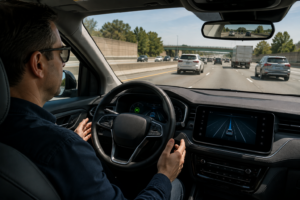 Advanced driver assistance systems, commonly called ADAS, include a broad range of vehicle technologies designed to help drivers detect hazards, maintain position, control speed, or respond to potential collisions. Some systems provide warnings. Others can temporarily control steering, acceleration, braking, or a combination of these functions.
The National Highway Traffic Safety Administration separates these technologies into different levels of assistance. Some systems only provide warnings or emergency interventions, while more advanced systems may continuously assist with steering, acceleration, or braking.
Adaptive cruise control is one common example. The system adjusts vehicle speed to maintain a selected distance from traffic ahead. Lane keeping assistance can help prevent a vehicle from unintentionally drifting across lane markings.
More advanced systems can combine both functions. These technologies may control steering and speed at the same time while the vehicle travels on certain roads. Even when a system allows the driver to temporarily remove their hands from the wheel, the driver still needs to monitor the roadway.
Partial automation is therefore different from fully autonomous driving. The technology supports the driver rather than replacing them.
Why Partial Automation Can Be Confusing
Modern driver assistance technology can create a driving experience that feels significantly different from traditional cruise control. A vehicle may steer through gentle highway curves, maintain distance from surrounding traffic, adjust speed, and remain centered in a lane with relatively little physical input from the person behind the wheel.
That capability can create confusion about the driver’s role. When a vehicle performs several driving functions at once, the technology may appear more capable than it actually is.
Some systems also allow hands-free operation on approved highways. This can create the impression that the vehicle is driving itself. In reality, the driver remains responsible for watching the road and responding when the system encounters conditions it cannot properly handle.
Hands-Free Does Not Mean Attention-Free
Hands-free driving assistance does not mean that a driver can stop monitoring traffic. The system may still require the driver to watch surrounding vehicles, pedestrians, construction areas, lane changes, stopped traffic, and unexpected hazards.
Some vehicles use cameras or steering wheel sensors to monitor driver attention. These systems may provide warnings when they detect that the driver is looking away from the road for too long.
However, driver monitoring technology does not eliminate the need for human judgment. A driver may need to take control quickly when weather, road design, traffic patterns, or other conditions change.
Why Driver Overreliance Has Become a Safety Concern
One of the major concerns surrounding partial automation is driver overreliance. When an automated system works consistently during ordinary highway travel, drivers may gradually begin to trust it more than they should.
A driver may become less focused, pay more attention to a phone or passenger, or assume the vehicle can respond to every hazard. This can become especially dangerous when the automated system encounters an unusual or unexpected roadway situation.
The National Transportation Safety Board highlighted this concern after investigating two fatal crashes involving hands-free partial automation. In both cases, vehicles struck stationary vehicles while traveling at highway speeds.
The agency concluded that driver overreliance on the systems contributed to the crashes. These investigations demonstrate why even advanced technology still depends heavily on driver attention.
Automation Can Change Driver Attention
Traditional driving requires continuous physical and mental involvement. Drivers steer, brake, accelerate, check mirrors, watch traffic signals, monitor lane position, and respond to surrounding vehicles.
Partial automation can reduce some of those tasks. While that may decrease driver workload, it can also make it easier for a person to become mentally disengaged.
A driver who does not need to steer continuously may become less alert during long highway trips. If the automation suddenly requires intervention, the driver may need additional time to understand the situation and react.
This creates an unusual safety challenge. The driver performs fewer physical tasks but still needs to remain mentally prepared to take control at any moment.
Common ADAS Features Drivers May Encounter
ADAS refers to many different technologies rather than a single system. Modern vehicles may include several safety and assistance features at the same time.
Adaptive Cruise Control
Adaptive cruise control maintains a selected speed while adjusting the vehicle’s pace according to traffic ahead. Some systems can slow the vehicle significantly or bring it to a complete stop.
Drivers still need to monitor surrounding traffic. The system may not correctly recognize every stationary vehicle, pedestrian, cyclist, or unusual obstacle.
Lane Keeping and Lane Centering
Lane keeping assistance can apply steering input when a vehicle begins moving toward a lane boundary. Lane centering systems provide more continuous steering assistance to help keep the vehicle near the center of its lane.
These systems often rely on cameras to recognize road markings. Faded lines, construction zones, temporary lanes, heavy rain, snow, glare, and unusual road layouts may affect performance.
Automatic Emergency Braking
Automatic emergency braking systems attempt to identify an imminent collision and apply the brakes when necessary. Some newer systems can detect vehicles, pedestrians, and cyclists.
The technology provides an additional safety layer, but drivers should not rely on it as a substitute for normal braking and hazard awareness.
Blind Spot Monitoring
Blind spot monitoring can alert drivers when another vehicle is traveling alongside them. Some systems can also provide steering assistance if the vehicle begins moving into an occupied lane.
Drivers should continue checking mirrors and surrounding traffic because sensor coverage varies between vehicles.
Situations Where Driver Assistance May Struggle
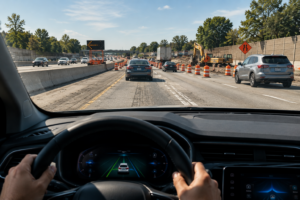 ADAS performance depends on many factors, including road conditions, weather, lighting, sensor visibility, lane markings, traffic patterns, and the type of hazard ahead.
Construction zones are one common challenge. Temporary lane markings can conflict with existing painted lines. Lanes may suddenly narrow or shift. Cones, barriers, construction vehicles, and merging traffic can create situations that differ significantly from normal highway conditions.
A human driver may recognize temporary traffic patterns more easily than an automated camera-based system.
Weather can create additional limitations. Heavy rain, snow, fog, or direct sunlight can interfere with cameras and sensors. Dirt, ice, or debris covering a sensor may also reduce its ability to detect surrounding objects.
Stationary Vehicles Can Present Particular Challenges
Stopped vehicles on high-speed roadways can create serious hazards. A vehicle disabled in a travel lane may require drivers to react quickly by braking or changing lanes.
Recent federal investigations involving partial automation have drawn attention to situations where vehicles using driver assistance systems collided with stationary vehicles.
These incidents demonstrate why drivers should continue scanning the roadway ahead even when automated features are active.
Driver Monitoring Systems Are Becoming More Important
Many newer vehicles include driver monitoring systems designed to determine whether the person behind the wheel remains attentive.
A small camera inside the cabin may monitor head position or eye direction. Other systems track interaction with the steering wheel.
If the vehicle detects that the driver is not paying enough attention, it may produce dashboard warnings, sounds, seat vibrations, or steering wheel alerts.
Some vehicles may gradually reduce automation functionality if the driver repeatedly ignores warnings.
Driver monitoring systems are becoming increasingly important as automakers introduce more advanced hands-free technologies.
Why Knowing Your Vehicle Matters
Automakers use different names for similar driver assistance features. One manufacturer may use a branded name for adaptive cruise control while another company uses different terminology for a system that performs a similar function.
This can make it difficult for drivers to understand exactly what a particular technology does.
Drivers can review the vehicle owner’s manual to learn about available features, dashboard indicators, system limitations, and conditions that may cause the technology to disengage.
It is also helpful to understand whether a feature only provides a warning or can actively control steering or braking.
ADAS Does Not Replace Defensive Driving
Driver assistance technology works best as an additional layer of safety rather than a replacement for normal driving habits.
Maintaining a safe following distance, watching surrounding traffic, controlling speed, checking mirrors, and anticipating hazards remain important regardless of the technology installed in a vehicle.
Drivers should also avoid using automated systems as an opportunity to focus on unrelated activities. Looking at a phone, watching videos, reading messages, or becoming deeply engaged in conversations can reduce the ability to respond quickly when automation reaches its limits.
Additional information about roadway hazards, vehicle safety, and accident prevention can be found throughout Accident Navigator.
What Drivers Should Do When a System Disengages
Partial automation systems may disengage when road conditions move outside their operating limits. Drivers should be prepared for these transitions rather than waiting until the vehicle issues an urgent warning.
Monitoring nearby traffic, lane position, road conditions, and surrounding vehicles can make it easier to regain control when the system disengages.
If a driver assistance feature repeatedly becomes unavailable, sensors or cameras may need inspection. Dirt, snow, ice, debris, or physical damage can interfere with some technologies.
Vehicle-specific instructions should always come from the manufacturer’s documentation.
What Happens After an Accident Involving Driver Assistance?
Accidents involving partial automation can raise additional questions because both driver behavior and vehicle technology may become relevant.
Investigators may examine whether the driver assistance system was active at the time of the crash, whether warnings appeared before impact, whether the driver attempted to intervene, and whether the system disengaged.
Some vehicles also store information about speed, braking, steering input, driver alerts, or system status. The amount of available information depends on the vehicle and the circumstances surrounding the crash.
As modern vehicles contain more cameras, sensors, computers, and automated features, accident investigations can become increasingly technical.
The Future of Partial Automation Safety
Vehicle automation continues to develop rapidly. Cameras, radar systems, computing technology, and driver monitoring features are becoming more sophisticated.
Automakers are also expanding the roads and conditions where certain assistance systems can operate.
At the same time, transportation safety agencies continue studying how these systems interact with human drivers. Future safety standards may increasingly focus on both technical system performance and driver behavior.
One major question is how manufacturers can help drivers understand the difference between assistance and autonomy.
Using Technology Without Giving Up Driver Awareness
Partial automation and ADAS can provide useful support on modern roads. Adaptive cruise control can help maintain distance. Lane centering can assist with vehicle positioning. Automatic emergency braking may respond when a crash risk develops. Blind spot monitoring can alert drivers to nearby vehicles.
These technologies are most effective when drivers understand what they can and cannot do.
The presence of advanced technology does not eliminate the need for attention, judgment, and readiness to intervene. A modern vehicle may perform more tasks than vehicles from previous generations, but the person behind the wheel still plays a central role in roadway safety.
As partial automation becomes more common, understanding the difference between driver assistance and true autonomous driving may become one of the most important parts of navigating modern roads safely.